Do animal studies matter for humans?
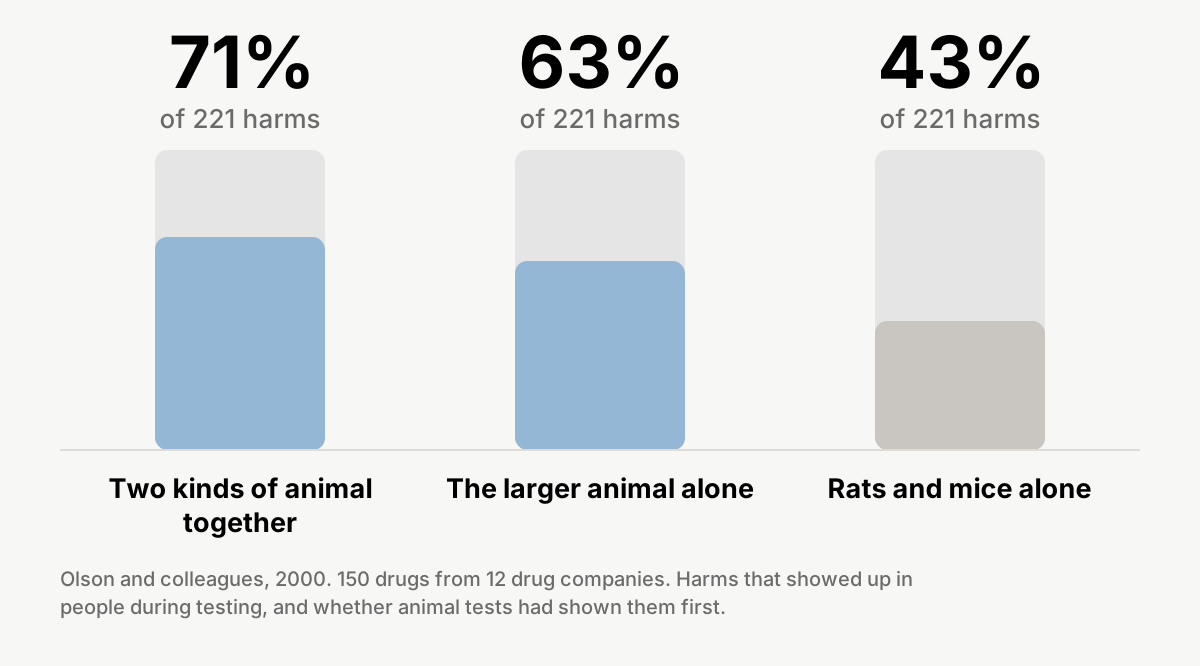
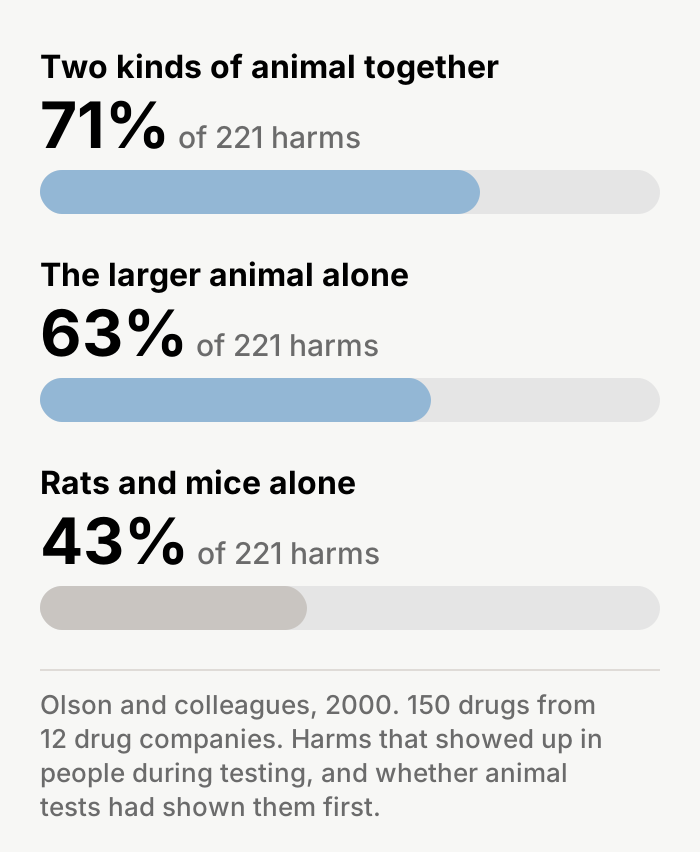
Yes, for three reasons. First, new drugs are tested on animals before the first human dose is set. Those tests caught 71% of the harms later seen in people. Second, 84% of the things linked to cancer in people also gave lab animals cancer. Third, microplastics are following the same path. What showed up first in rats and mice is now showing up in people. Studies in people are growing fast, and they keep finding what the animal studies found first.
7 minute read · Updated · By Aelo Research
Short Summary
Yes, animal studies do matter for humans. Here are three facts showing why.
First, drugs. For more than 50 years, new drugs have been tested on animals before the first human dose. Across 150 drugs, those tests flagged 71% of the harms later seen in people.[2, 4, 6]
Second, cancer. Of things known or thought to cause cancer in people, 84% also gave lab animals cancer.[25]
Third, microplastics. Rats in 1990: plastic in their blood. Adults in 2024: plastic in the blood of 32 of 36. Pregnant rats in 2020: plastic reached their unborn pups. Placentas in 2024: plastic in 62 of 62. Male mice in 2022: fewer living sperm. Men at fertility clinics in 2024: plastic in the semen of 100 of 100 tested.[42, 44, 46, 48, 51, 55]
That's why scientists take mouse studies seriously. Mice go first. Studies in people keep catching up.
Why do scientists trust animal studies?
Every new mouse study gets the same reply: "It was only mice." Medicine disagrees. Here is why.
New drugs are tested on animals first. The US, Europe and Japan share one rulebook for drug safety. It calls for tests in 2 kinds of animal before the first human dose.[4, 21]
The first human dose comes from those tests. It is set mainly from the highest dose that did no harm in the animals.[4]
Safety agencies act on harm in animals. The WHO's cancer agency and the US EPA treat it as a warning for people.[8, 10, 12]
Only animal studies can test cause and effect in a living body. No one can feed people plastic on purpose.[1]
Do animal tests catch harm first?
Yes, most of the time. In 2000, 12 drug companies looked back at 150 drugs that had harmed people in testing. Animal tests had already shown 71% of those harms.[2]
Cancer tells the same story. The WHO's cancer agency looked at things known or thought to cause cancer in people. 84% also gave lab animals cancer. For some, the animals showed it first.[9, 25]
How often did animal tests catch the harm first?[2, 4]
Microplastics: animals first, people later
Blood
Rats1990
In 1990, scientists in London fed rats tiny plastic particles. The smallest particles got into their blood.
People2024
In 2024, a team in South Korea found plastic in the blood of 32 of 36 healthy adults. The more plastic, the higher a common sign of inflammation.
The rats showed the way in. Now it is in most people tested.[42, 43, 44]
Placenta
Rats2020
In 2020, a Rutgers team put tiny plastic into pregnant rats' lungs. A day later, it had reached their unborn pups. The pups weighed 7% less.
People2022 and 2024
In 2022, researchers in Tehran checked 43 placentas. Plastic was in 13 of 13 from babies who grew too slowly. More plastic went with smaller newborns. In 2024, a New Mexico lab tested 62 placentas. Not one came back clean.
In rats, plastic reached the pups, and they weighed less. In people, it is in the organ that feeds the baby.[45, 46, 48, 49]
Read more: microplastics, pregnancy and babiesSperm
Mice2022
In 2022, a Nanjing lab gave male mice plastic in their drinking water for 6 months. The mice ended up with fewer healthy sperm and less testosterone.
People2024
In 2024, at fertility clinics in China, plastic was in the semen of 100 of 100 men tested. Of the 8 men with the most kinds, 6 had a low sperm count. Of the 11 with the fewest, 1 did.
Mice2025
In 2025, mice fed tiny bits of worn plastic for 29 weeks made about 70% fewer sperm.
In mice, plastic meant fewer sperm. In men, more kinds of plastic went with fewer sperm.[51, 52, 54, 55]
Read more: microplastics and fertilityBrain
Mice2022
In 2022, the same Nanjing lab gave mice plastic in their drinking water for 6 months. It showed up in their brains, and the mice did worse on a memory test. At least 3 other labs have seen worse memory in mice given plastic.
People2024 and 2025
In 2024, a São Paulo team found plastic in the brains of 8 of 15 people who had died. In 2025, a New Mexico team found about 11 times more plastic in brain samples than in liver samples. Other scientists have questioned how it was measured.
In mice, plastic in the brain came with worse memory. Now it is turning up in human brains.[33, 58, 60, 61, 62, 63]
Read more: microplastics, memory and the brainHeart and blood vessels
Rats and mice2020 and 2023
In 2020, rats given plastic for 90 days grew scar tissue in their hearts. In 2023, mice bred to clog easily were fed plastic. Those fed the most grew more fatty buildup in their main artery.
People2024 and 2026
In 2024, surgeons in Italy tested fatty buildup from the neck arteries of 257 patients. They found plastic in 150. Over about 3 years, they had 4.5 times the rate of heart attack, stroke or death of those without it. In 2026, surgeons in Beijing found plastic in heart tissue from 33 of 33 patients. Hearts with more scarring held over 40% more.
Rats and mice showed scarred hearts and clogged arteries first. In people, plastic now turns up in both.[64, 65, 66, 67]
Read more: the artery studyWeight
Mice2022 and 2024
A Louisville lab ran the same test twice, in 2022 and 2024. It put tiny plastic particles, in 2 sizes, in mice's drinking water. Both times, mice on the smaller particles gained extra weight.
People2024
In 2024, a study of 121 young adults in China checked their stool for plastic. Those with more plastic tended to be heavier for their height.
The mice got heavier on plastic water. In people, more plastic went with more weight.[68, 69, 70]
Read more: microplastics and weight gainWhy do scientists use mice?
Because inside, a mouse is built a lot like us. About 99 in 100 mouse genes have a match in people. Mice and people also have the same guard posts in the gut wall. They pull in tiny bits of what we swallow.[29, 31, 32]
And many of these mice took in microplastics one way people do: in their drinking water.[51, 58, 68, 84]
Did animal studies point scientists to the human findings?
Yes. When scientists test human arteries, brains, livers and semen for microplastics, they cite the animal studies first. A heart team in Beijing wrote that animal studies pointed to plastic in clogged arteries. So they tested 17 human arteries. Plastic was in 17 of 17.[62, 66, 85, 90, 91]
The animal studies drew the map. The human studies keep following it.
What did a 2024 review of 31 microplastics studies find?
In 2024, a team at UC San Francisco graded 31 studies. 28 were in rats and mice. Their verdict: microplastics are "suspected" of harming fertility, the gut and the lungs in people.[1]
"Suspected" means the warning signs are real and the proof is not done yet. In all 5 rat and mouse sperm studies, more plastic meant worse sperm. The authors wrote that the real harm is likely bigger than their verdict.[1]
Meanwhile, sperm counts around the world fell by about half from 1973 to 2018. No one has proven why.[56]
What this proves, and what it doesn't
What these studies show
What these studies did not prove
Questions readers are asking
Are animal studies reliable?
Often, yes. A survey of 150 drugs checked this. Animal tests had flagged 71% of the harms later seen in people. A 2018 study of 3,290 drugs came to the same view.[2, 24]
How similar are mice to humans?
Very, in their genes. About 99 in 100 mouse genes have a match in people. The parts that build proteins are about 85% the same.[29, 30]
Why not just test people?
No one can feed people plastic on purpose. So only animal studies can test cause and effect in a living body. Studies of people can only look for links.[1]
Has plastic been found in the human body?
Yes. Scientists have found it in blood, placentas, testicles, semen, the fatty buildup in arteries and brain tissue.[44, 48, 54, 55, 62, 66]
If animal tests work, why do 9 in 10 new drugs fail?
Most often because the drugs don't work well enough in people. That explains 40 to 50% of failures. Side effects cause about 30%. So most failures are not about harm the animals missed.[72]
Do regulators act on mouse results?
Yes. BPA is a chemical in some plastics. In 2023, a result in mice led Europe's food safety agency to act. It made its safe daily limit for BPA 20,000 times lower. In 2024, the EU banned BPA in most food packaging.[14, 15]
Did animal tests ever warn about a plastic before?
Yes. Vinyl chloride is used to make vinyl plastic. In 1971, it gave rats tumors. In 1974, doctors found a rare liver cancer in the workers who made the plastic.[9, 27, 28]
What about the times animal tests got it wrong?
The famous misses went the other way. Take the morning sickness pill thalidomide, or a 2006 drug trial in London. The animals showed too little harm, not too much. Even researchers who campaign against animal testing found this. Harm in animals can add real weight to the case for risk in people.[73, 74, 78]
Does the law still require animal tests?
Not in those words anymore. Since 2022, US law says "nonclinical tests." That means animal, lab and computer tests. The drug rulebook used in the US, Europe and Japan still calls for animal tests. And the FDA still calls them a critical way to spot possible risks to people.[4, 17, 20]
About Aelo
Lab-tested on particles down to 0.5 microns (500 nanometers). Aelo's products are not connected to this research.
The technical record
Everything above is the story. Everything below is the paperwork: the exact statistics as published, the study’s own fine print, and the parts only a methods reviewer will want.
The numbers, exactly as published
| Blood | Jani 1990 (rats, abstract): 34% of 50 nm and 26% of 100 nm particles absorbed; particles over 300 nm absent from blood. Leslie 2022: at least one plastic above the quantification limit in 17 of 22 donors; mean 1.6 µg/mL (Results, Table 2; read in full 2026-07-29; also quoted in Lee 2024's Discussion). Lee 2024: 32 of 36 by infrared (88.9%), mean 4.2 particles/mL; positive correlation between particle count and hsCRP, an inflammation marker. |
|---|---|
| Placenta | Fournier 2020 (rats): 20 nm particles placed in the windpipe on gestational day 19; 24 hours later, particles in the placenta and fetal liver, lungs, heart, kidney and brain; fetal weight 7% and placental weight 8% below controls. Amereh 2022 (abstract): microplastics in 13 of 13 placentas from pregnancies with fetal growth restriction and in 3 of 30 normal pregnancies, the rest below the detection limit; placental microplastics correlated inversely with birth weight (r = −0.82), birth length (−0.56) and head circumference (−0.50). Garcia 2024: 62 of 62; 6.5 to 685 µg/g, mean 126.8 µg/g. Huang 2015 (mice, abstract): injected particles up to 500 nm crossed the placenta and were seen in fetal organs 4 hours after injection. |
| Sperm | Jin 2022 (mice, 15 per group, 100 or 1,000 µg/L in drinking water, 180 days): lower sperm viability, higher sperm abnormality, lower serum testosterone, LH and FSH (Fig 2C-D, Fig 3). Hu 2024: 23 of 23 human testes, mean 328.44 µg/g. Zhang 2024: 100 of 100 men with plastic in semen and urine; each extra kind of plastic, β −0.18 for sperm concentration (p = 0.036); low sperm concentration (under 20 million per mL) in 6 of 8 men with 6 or more kinds against 1 of 11 with 3 or fewer. Jeong 2025 (33 male mice, physically abraded PET bits of 50 to 100 µm, in feed, 5 mg a week from 5 to 34 weeks of age): cauda sperm count 17.0 × 10⁶ against 5.3 × 10⁶ (p < 0.01); testosterone −24.34% (p < 0.05); Leydig cells −32.16%. |
| Brain | Jin 2022 (mice, 12 per group, 10 in the maze test, 180 days): day 6 time in the platform quarter, clean water 44.37 ± 12.80% against 16.87 ± 15.47% to 32.40 ± 15.68% in the 6 plastic groups (p = 0.0013 to 0.0352). Amato-Lourenço 2024: 16 particles in 8 of 15 olfactory bulbs. Nihart 2025: 2024 medians 4,917 µg/g in brain against 433 in liver; the dementia median (26,076) came from a single digestion step, and the paper says values fell after extra fat removal. |
| Heart and blood vessels | Li 2020 (rats, 0.5 µm particles at 0.5, 5 or 50 mg/L for 90 days; route not stated in the abstract). Wang 2023 (ApoE-knockout mice on a high-fat diet, 2.5, 25 or 250 mg/kg a day by tube for 19 weeks; plaque area larger at 250 mg/kg). Marfella 2024: event rate 30 of 150 (20.0%) with plastic against 8 of 107 (7.5%) without; adjusted hazard ratio 4.53 (95% CI 2.00 to 10.27). Pan 2026: high-fibrosis 171.74 µg/g against low-fibrosis 119.33 µg/g (P = 2.5 × 10⁻⁴). |
| Weight | Zhao 2022 (male mice, 10 per group, 12 weeks in drinking water): 3 of 4 plastic groups ahead on weight by week 3; more fat in 3 of 4 at the week-9 scan. Zhao 2024 (13 weeks): the 0.5 µm group gained more, mostly fat; the 5 µm group did not. Hong 2024: positive link between stool plastic and body mass index (OR 1.264, 95% CI 1.108 to 1.441). |
How the counts on this page were made
Research growth. PubMed, searched with microplastics[tiab] AND (human[tiab] OR health[tiab]) and counted by year of publication, all years retrieved on 2026-09-24: 11 papers in 2015, 25 in 2016, 36 in 2017, 97 in 2018, 192 in 2019, 383 in 2020, 522 in 2021, 825 in 2022, 1,103 in 2023, 1,416 in 2024 and 1,739 in 2025. From 2015 to 2025 that is 158 times as many a year, the figure used on this page and in the chart.[3]
Studies in mice and rats. PubMed on 2026-09-24: (microplastic*[tiab] OR nanoplastic*[tiab]) AND (mice[mh] OR rats[mh]) NOT review[pt] gave 1,111 papers. Adding title and abstract words (mice, mouse, rats, rat) gave 1,339. These counts include every rodent study that mentions microplastics, not only health studies, so the page says "more than 1,100".[3]
Dates. Each year on the timeline cards is the year the study was first published online. The Italian placenta study, for example, went online in December 2020 and appeared in print in January 2021; the Seoul lung study went online in September 2020; the Nanjing stool study went online in December 2021. "158x" describes research on microplastics and health (papers that mention humans or health); the full set of microplastics papers grew about 51 times over the same decade.[3, 47, 86, 87]
Studies in people. No clean PubMed count exists for studies that measured plastic in people; the "Humans" label also covers human cell studies and reviews. The page uses the 2024 review's count instead: 28 rodent studies and 3 human studies met its criteria for fertility, the gut and the lungs.[1]
What the track-record numbers mean, exactly
Olson 2000's 71% is the share of human harms that animal tests had also shown (sensitivity). It does not say how often an animal finding comes true in people. The survey covered only medicines that went on to harm people, and it was an industry project; the first author worked at Pfizer. Only the abstract was read, because the paper is paywalled.[2]
Monticello 2017 also reports that animal tests flagged 48% of the harms seen in first human trials, and that when animals showed harm to an organ, people showed the same harm 43% of the time. Part of the 86% reflects that most drugs do not harm most organs. The authors worked at drug companies and the IQ Consortium, an industry group. Abstract only.[23]
Bailey, Thew and Balls (2014), writing from the British Union for the Abolition of Vivisection and FRAME, analyzed 2,366 drugs. They found that no harm in rats, mice or rabbits gave "little or virtually no evidential weight" that people would be spared, and that harm in these species "can add considerable evidential weight for human risk", though how much varied more than 100-fold between drug types. Both sides of this debate have interests: the supportive studies come from industry, the critique from anti-vivisection groups.[78]
Clark and Steger-Hartmann (2018, authors at Elsevier and Bayer) studied 3,290 approved medicines and 1,637,449 reported adverse events over more than 70 years. They report that the study "confirmed the general predictivity of animal safety observations for humans", with heart-rhythm changes in dogs among the clearest matches. Abstract only.[24]
The EPA says almost one-third of human cancer-causers were identified after animal testing, citing Huff 1993, which counted nearly 30 agents for which the animal evidence came first. Wilbourn 1986, the source of the 84% figure, and Huff 1993 were read as abstracts only. In the vinyl chloride case, the 1971 rats developed skin, lung and bone tumors, not the workers' liver cancer; the 1971 and 1974 papers were checked by title and date only.[10, 25, 26, 27, 28]
Sun 2022 attributes the failure of about 9 in 10 drugs in clinical trials to lack of effect (40% to 50%), unmanageable side effects (30%), poor drug-like properties (10% to 15%) and business reasons (10%), from trial data for 2010 to 2017.[72]
How testing on animals became the rule
1937: a new US medicine, Elixir Sulfanilamide, killed more than 100 people. It had never been tested on animals or people, and it was mixed in a poison related to antifreeze. 1938: Congress passed a law requiring drug companies to send the FDA safety data before selling a new drug.[6]
1961: thalidomide, a pill for morning sickness sold in 46 countries, was banned. In all, more than 10,000 children were born with severe birth defects. 1962: a new US law let the FDA ask for animal test results before any testing in people. By the 1970s, drugs taken for years were usually tested in 2 kinds of animal, over the animals' whole lives.[6, 73, 93]
1997: the US, Europe and Japan agreed on one rulebook for safety-testing new medicines. Its 2009 update still calls for tests in 2 kinds of animal before a drug's first human dose. 2022: US law stopped naming animal tests and now lists lab and computer tests beside them. 2026: the FDA wants to rely less on animal tests and is adding tests on computers and human cells, yet it still calls animal safety tests "a critical method to identify potential risks to human health."[4, 17, 19, 20]
The rules, word for word
ICH M3(R2) says the length of the animal studies "conducted in two mammalian species (one non-rodent) should be equal to or exceed the duration of the human clinical trials", up to set maximums, and its worked examples name the dog as the non-rodent. It allows less, or different, animal support for very small exploratory first-in-human studies, so "every trial needs two species" would be too strong. The FDA's 2025 roadmap names dogs and primates among the animals used.[4, 21]
The first human dose: "In general, the No Observed Adverse Effect Level (NOAEL) determined in nonclinical safety studies performed in the most appropriate animal species gives the most important information."[4]
1937 and 1938: the FDA's historian writes that Elixir Sulfanilamide "was not tested in animals or humans prior to marketing", that its solvent, diethylene glycol, "was a poison (chemically related to anti-freeze)", and that the tragedy "killed over 100 people". The 1938 Food, Drug, and Cosmetic Act added "a new provision ... requiring drug sponsors to submit safety data to FDA officials for evaluation prior to marketing".[6]
The 2016 "forever chemicals" finding: "The NTP concludes that PFOA is presumed to be an immune hazard to humans based on a high level of evidence that PFOA suppressed the antibody response from animal studies and a moderate level of evidence from studies in humans." The monograph reaches the same conclusion for PFOS.[92]
"For more than 50 years": the FDA's historian writes that within a few years of the 1962 drug amendments "a fairly standardized set of animal toxicology studies to precede and support human trials was in place", and that by the 1970s a drug for chronic use was generally tested in two animal species. The 1962 law allowed the FDA to require those reports; it did not itself order animal tests.[6]
The Declaration of Helsinki, the world's code of ethics for medical research, says research on people must rest on "adequate laboratory and, as appropriate, animal experimentation."[7]
The 2022 change (Pub. L. 117-328, §3209, 29 December 2022) substituted "nonclinical tests" for "preclinical tests (including tests on animals)" in 21 U.S.C. 355(i)(1)(A). It made animal tests one option among several; it did not ban them. The FDA's direct final rule of 22 September 2026 (FR Doc. 2026-19350) replaces "laboratory animals or in vitro" with "nonclinical" studies in 21 CFR 312.23(a)(8), effective 4 February 2027 unless significant objections arrive by 7 December 2026, and the FDA says it does not expect the change to affect industry practice.[17, 18, 19]
The FDA's April 2025 roadmap aims to make animal studies "the exception rather than the norm" for drug safety testing within 3 to 5 years, starting with antibody drugs. In July 2025 the NIH said it will no longer write funding calls that support only animal research, while animal models "continue to be important".[21, 22]
The EPA's default assumptions: "an agent that produces an adverse developmental effect in experimental animal studies will potentially pose a hazard to humans"; "An agent that produces an adverse reproductive effect in experimental animals is assumed to pose a potential threat to humans"; and "an agent that produces detectable adverse neurotoxic effects in experimental animal studies will pose a potential hazard to humans."[11, 12, 13]
The BPA example is about a plastic chemical, not microplastic particles. The EU's 2024 regulation sets a tolerable daily intake 20,000 times lower than the 2015 temporary one, and also records earlier bans on BPA in baby bottles and in cups for infants. Some agencies, including the European Medicines Agency, formally disagreed with parts of the 2023 opinion.[14, 15]
Europe's medicines agency adds that the animals chosen should respond to the drug the way people do, and that companies must explain their choice.[5]
The animals-first rows: sources and caveats
Access. Read as abstracts only: Jani 1990, Huang 2015, Amereh 2022, Ragusa 2021, Li 2020 (rats), Zhao 2023, Hong 2024, Pan 2026, Wang 2022 and Lee 2022. Leslie 2022's "17 of 22" comes from Aelo's full-text reading of 29 July 2026 (Results, Table 2); on 2026-09-22 and 2026-09-24 the publisher blocked automated reading, and the abstract gives only "22 volunteers" and a mean of 1.6 µg/mL. Read in full: Lee 2024, Fournier 2020, both 2022 Nanjing papers, Jeong 2025, Amato-Lourenço 2024, Wang 2023, Marfella 2024, Hu 2024 (with its published comment and reply) and the two Louisville studies.[43, 44]
Placenta row. The Tehran study (Amereh 2022) was read as an abstract. Its 2 groups were picked by baby size: 13 pregnancies where the baby grew too slowly and 30 normal ones. Plastic turned up almost only in the first group, so its link between plastic and smaller newborns partly restates how the groups were chosen. The abstract says 3 of 30 normal placentas held plastic; the paper's own figure appears to show 4, so the story leaves that number out. The 2020 Rutgers rats had plastic placed in the windpipe, not swallowed.[46, 49]
Testicles row. In 2021 the Nanjing lab reported that 4 and 10 µm particles reached mouse testicles within 24 hours and that sperm quality and testosterone fell after 28 days; its abstract does not say how the particles were given, so the story uses the lab's 2022 drinking-water study instead. The 2022 study reports its sperm results only as bar charts; read off Figure 2, about 9 in 10 sperm were alive in clean-water mice against about 4 to 6 in 10 in plastic-water mice, and misshapen sperm rose from about half to between about two-thirds and three-quarters. Those chart readings are approximate and are not printed in the story. Jeong 2025 fed 50 to 100 µm bits of worn PET in food at 5 mg a week; the authors call this an "annual intake relevant dose", an estimate this page does not repeat. Its motility result is shown in videos, with no number. Zhao 2023 ("male subfertility" in mice exposed before and after birth through drinking water) was read as an abstract.[50, 51, 52, 53]
A size puzzle. In the 1990 rat study, particles larger than 300 nanometers were not found in the blood. Several human studies report much larger particles in blood and organs. Possible reasons include people taking up larger particles than rats do, and lab contamination.[42, 62]
In the 2024 blood study, blank samples with no blood picked up 0 to 5 plastic bits on their own, and the team did not subtract them. The blood itself averaged 4.2 bits per milliliter. The link to the inflammation marker (hsCRP) is a correlation in 36 people.[44]
The heat-based test used by the New Mexico lab (placenta, testicles, brain), in the artery study and in the 2026 heart study can mistake fat for polyethylene. Nine scientists from across Europe (Monikh and colleagues, 2025) challenged the brain study over limited contamination controls and lack of validation steps; the authors replied. In the brain study, the dementia figures came from a single digestion step, and the paper's table notes that values fell after extra fat removal, with no new number given.[54, 63]
The 2023 artery-buildup study used mice bred to clog easily (ApoE-knockout), on a high-fat diet, and its clearest effect came at the top dose. The artery study's own authors note that most animal studies use far more plastic than they measured in people. The route in the 2020 rat heart study is not stated in its abstract.[64, 65, 66]
In the 2025 Beijing-led study, the blood-vessel blockages and the behavior changes followed plastic injected into the blood; the tube-fed mice showed only that plastic reached brain vessels. The mice's balance and grip were back to normal by day 7 to day 28. The authors call it "premature" to apply their result to people.[33]
Weight. The 2024 stool study grouped 121 young adults by how often they ate take-out food and found a positive link between plastic in stool and body mass index; it is a snapshot, not a study that followed people over time. A 2026 study of 1,080 ten-year-olds linked some plastic types to overweight and others to underweight. The larger particles in the 2024 Louisville study did not raise the mice's weight, and the 2018 Hangzhou mice given the higher amount lost weight.[69, 70, 71, 84]
Liver, gut and lungs. The 2018 Hangzhou mouse study, the 2020 Seoul rat study, the 2021 São Paulo lung study, the 2022 England lung study and the 2022 Nanjing stool study were read as abstracts; the 2022 Hamburg liver study was read in full. The Hamburg study is a proof-of-concept case series of 11 livers, and its authors say plastic build-up could be a cause or a result of liver scarring. The Nanjing authors say bowel disease may make plastic stay longer in the gut. The Seoul rats also showed changes in other measures, but without a dose pattern.[84, 85, 86, 87, 88, 89]
Their own words. The quotes in "Did animal studies point scientists to the human findings?" come from the opening of each human study: Marfella 2024 (author manuscript pp. 4 to 5), Liu 2024 (abstract), Amato-Lourenço 2024 (introduction), Montano 2023 (abstract) and Horvatits 2022 (abstract).[62, 66, 85, 90, 91]
Heart. The 2026 heart study compared heart tissue from 33 surgery patients with high and low scarring; it also gave mice plastic by tube and found worse heart scarring under a stress drug. Abstract only.[67]
Deng 2017, often cited for plastic moving from the gut to mouse organs, was left out: letters in 2019 questioned whether its uptake figures were believable.[82, 83]
The 2022 Nanjing brain paper was corrected in December 2022. The erratum fixes the author affiliations and one abstract word ("higher" should read "lower"); this page uses the corrected paper.[59]
More matches: liver, lungs and gut
These three rows are kept out of the story above. The liver row rests on a small case series, the lung studies are about breathed air rather than swallowed plastic, and in the gut study the authors say the disease itself may keep plastic in the gut longer.
Liver. The 1990 London rat study found the particles in the rats' livers too. In 2018, a Hangzhou team gave mice plastic in their drinking water for 5 weeks, and it disrupted how their livers handled fat. In 2022, doctors in Hamburg found plastic in 6 of 6 human livers scarred by cirrhosis; in livers without disease there was too little to count. Jani 1990 (rats, abstract): about 7% of the 50 nm dose and 4% of the 100 nm dose ended up in the liver, spleen, blood and bone marrow. Lu 2018 (mice, abstract): 0.5 and 50 µm polystyrene by mouth, in µg/L amounts, for 5 weeks; at 1,000 µg/L, lower liver triglyceride and cholesterol and lower expression of fat-making genes. Horvatits 2022 (full text): cirrhotic livers 4.6 to 11.9 particles per gram (mean 8.3) against 0.3 to 1.9 (mean 1.0) in livers without disease, which the authors count as negative given the limit of detection.[1, 42, 84, 85]
Lungs. In 2020, scientists in Seoul had rats breathe plastic for 14 days, and signs of inflammation in their lungs rose with the amount they breathed. In 2021, a São Paulo team found plastic in 13 of 20 human lungs examined after death; in 2022, a team in Hull, England, found it in 11 of 13 lung tissue samples, with the most in the lower lungs. Lim 2021 (rats, whole-body inhalation of polystyrene for 14 days; published online September 2020): lung TGF-β and TNF-α rose with exposure concentration; other measures changed without a dose pattern. Amato-Lourenço 2021: 33 particles and 4 fibers in 13 of 20 autopsy lungs. Jenner 2022: 39 particles in 11 of 13 samples, 1.42 per gram before blank subtraction, lower lobes highest.[87, 88, 89]
Gut. In 2018, a Hangzhou team found that mice given plastic in their drinking water made less of the mucus that protects the gut wall, and their gut bacteria changed. In late 2021, a Nanjing University team found that people with inflammatory bowel disease had about 50% more plastic in their stool than healthy people, and the more plastic, the worse the disease. The authors say the disease may also make plastic stay longer in the gut, and the number of people tested is not in the abstract. Lu 2018 (mice, abstract): gut mucus secretion fell with both particle sizes; richness and diversity of cecal bacteria changed. Yan 2022 (abstract): 41.8 against 28.0 particles per gram of dry stool.[1, 84, 86]
Tap water, sperm counts and testosterone: the fine print
Kosuth 2018 tested 159 tap water samples from 14 countries. 81% held man-made particles, 98.3% of them fibers. The US had the highest mean, 9.24 particles per liter. The team identified particles by microscope and a stain for natural fibers, and wrote that the particles are "most likely" microplastics but that confirming this needs spectroscopy.[16]
Levine 2023 pooled 223 studies of semen samples collected from 1973 to 2018. Among men not selected for fertility, mean sperm concentration fell 51.6%, and the yearly decline rose from 1.16% after 1972 to 2.64% after 2000. The authors call for research on causes; they do not name one.[56]
Lokeshwar 2021 used US national survey data on 4,045 adolescent and young adult men, from 1999 to 2016. Average testosterone fell over time, and the fall held among men with a normal body mass index.[57]
About the 2024 review
Chartres and colleagues used the Navigation Guide method, with verdicts guided by the National Toxicology Program's OHAT approach. It was a rapid review done for California state lawmakers through the California State Policy Evidence Consortium, on a deadline, so it covered fertility, the gut and the lungs and did not look at weight or memory. After a shared start on 20% of the references, most studies were screened by one person, and a second person checked only the exclusions. Four databases were searched in July 2022 and April 2024. 22 of the 28 animal studies were in mice, 22 used polystyrene, and 22 were done in China. Exposures ran from 14 days to 32 weeks.[1]
"Suspected" sits one step below "presumed" on the review's four-step scale (known, presumed, suspected, not classifiable). For sperm quality, the review rated the body of evidence "high" and wrote: "We downgraded the evidence from 'presumed' based on the sample size and number of studies." Across the 5 sperm studies, 9 of 9 measured effects pointed toward harm. The abstract mentions lung cancer, but the body and the Conclusion name only colon cancer, as a suspected link. The authors noted that some publications came from the same lab groups, so errors could spread across studies.[1]
Six authors are at the University of California, San Francisco, and one at the Natural Resources Defense Council, an environmental advocacy group. The review ends with a call for government action. Funding: University of California Office of the President, the JPB Foundation and grant P30ES030284. The authors declared no competing financial interest.[1]
Why mice: the fine print
The 2002 gene figures are counted from the mouse side: "Approximately 99% of mouse genes have a homologue in the human genome", about 80% have one clear partner, and fewer than 1% have none, "and vice versa". Only about 40% of the human genome lines up with the mouse genome letter by letter.[29]
Europe's food-safety agency reports that in rodents 0.04 to 0.3% of swallowed test particles got past the gut wall, and that about 0.2% crossed human colon tissue in a lab chamber. More than 9 in 10 swallowed micro- and nanoplastics leave in stool.[32]
The 2025 mouse study's authors give their own, larger vessel measurements, and call it "premature" to apply their result to people. Nobody has measured whether the higher share of neutrophils in human blood changes the risk of these blockages.[33]
One review of placentas concludes that "the mouse model is often overvalued". Researchers also note that the type of placenta does not play a dominant role in how most drugs cross it.[36, 37]
Scientists still argue about how closely mouse gene responses match human ones. A 2013 study found mouse responses to injury and infection close to random against human ones; a 2015 re-analysis of the same data found a strong match.[79, 80]
Why Aelo does not turn mouse doses into human doses: there is no reliable way to do it for swallowed plastic. The formulas regulators use were built for drugs and chemicals that get into the blood, and more than 9 in 10 swallowed plastic bits pass straight through. So Aelo reports what the animals got and does not guess.[32, 40, 41]
Two more shared parts. Mice and people have the same white blood cells that swallow what does not belong. And a mouse's smallest brain vessels are about as narrow as people's: about 2 to 5 thousandths of a millimeter in mice against about 6 in people.[34, 35, 38, 39]
The two famous misses, in full
In 2006 in London, 6 healthy young men took a new immune drug, TGN1412, that had looked safe in monkeys. Within 12 to 16 hours all 6 were critically ill; all 6 survived. The drug flips a switch on certain immune cells. People's cells carry that switch; the monkeys' cells don't.[74, 75]
Thalidomide: mice turned out to be less sensitive to it than rabbits and monkeys. That taught regulators that species can react differently. Since then, drug testing has used several kinds of animal, and there has not been another thalidomide.[73]
Bailey, Thew and Balls (2014) wrote that the presence of harm in rats, mice or rabbits "can add considerable evidential weight for human risk", though how much varied more than 100-fold between drug types. The story above says "real weight" for that reason. A leading review that criticizes animal testing still opens by saying there is "no doubt" animal research has greatly benefited people.[77, 78]
The other kind of miss, and more cases
Animal tests can also flag harm that does not apply to people. The EPA's own example is a kidney tumor in male rats (the alpha-2u-globulin mechanism) that is not a hazard in people. Cancer agencies set such effects aside only with strong evidence that they do not apply to people.[8, 10]
Van Norman 2019 opens by saying "There is no doubt that the use of animals in science and medicine has significantly benefitted human beings", then lists drugs that passed animal tests and harmed people, including fialuridine. The 6 men in the 2006 London trial were given a dose 160 times lower than the monkeys' no-harm dose, after adjusting for body size.[76, 77]
How Aelo writes about animal studies
When Aelo writes about an animal study, it names the species in every sentence about an animal result. It says "caused" only for a controlled experiment, and only about those animals. It says "linked" or "went with" for studies of people. It sets out what the studies do not prove in plain view, near the end, and it reports published challenges to a study alongside the study.
Corrections to the earlier version of this page
The earlier version of this page said 113 men gave a semen sample and plastic was found in all 113. The study recruited 113 men, but only 100 had both semen and urine tested for plastic, and those 100 of 100 had plastic in both.[55]
It said more kinds of plastic were linked to lower sperm count, concentration and forward movement. In the adjusted results in the body of the paper, only sperm concentration held up.[55]
It said the 2024 review "did not reach the same conclusion" for obesity or memory. The review never looked at them.[1]
It said a 2023 heart-tissue study matched all its plastic levels to human levels. Only the lowest of 3 levels was matched. That study is no longer used here.[81]
It said artery patients with plastic in their plaque were about 4.5 times as likely to have a heart attack, stroke or death. The study's 4.53 compares rates over time after adjusting for other risk factors, so this page says 4.5 times the rate.[66]
About this version
The story was shortened and rewritten in plainer words for readers arriving from a single study. Only the animal findings with a clear match in people stay in the story. These matches were picked to show a pattern; they are not a full review. The 2024 finding of plastic in 23 of 23 human testicles (Hu 2024) moved to the statistics line of the sperm card. The history of animal testing, the liver and lung rows and the details of the two famous misses moved into this technical record, unchanged in substance. The placenta card now includes the 2022 Tehran study (Amereh 2022, read as an abstract), and the 2015 Taiwan mouse study moved to its statistics line. After a Brand Book 3.1 review, the gut row moved here too, and the cards now name the rats' route, the clinic population and the mouse strain. The 2022 Dutch blood study, the BPA example's own section and the tap-water paragraph were folded in or moved here. Every figure in the story is taken from the fact sheets named in the page's source file.[16, 43, 45, 49, 54]
Sources
- Chartres N, Cooper CB, Bland G, Pelch KE, Gandhi SA, BakenRa A, Woodruff TJ. Environ Sci Technol. 2024;58(52):22843-22864. PubMed 39692326. Effects of Microplastic Exposure on Human Digestive, Reproductive, and Respiratory Health: A Rapid Systematic Review
- Olson H, Betton G, Robinson D, et al. Regul Toxicol Pharmacol. 2000;32(1):56-67. PubMed 11029269. Abstract read; full text paywalled. Concordance of the toxicity of pharmaceuticals in humans and in animals
- PubMed (US National Library of Medicine), counts retrieved 2026-09-02 and 2026-09-24 through the E-utilities search service. Queries are given in the technical record. PubMed search counts for microplastics research
- International Conference on Harmonisation. ICH Harmonised Tripartite Guideline M3(R2), Step 4 version dated 11 June 2009. Guidance on nonclinical safety studies for the conduct of human clinical trials and marketing authorization for pharmaceuticals M3(R2)
- European Medicines Agency, CHMP. EMEA/CHMP/SWP/28367/07 Rev. 1, adopted 20 July 2017. Guideline on strategies to identify and mitigate risks for first-in-human and early clinical trials with investigational medicinal products
- Junod SW. FDA History Office. Undated PDF; latest reference 2008. FDA and Clinical Drug Trials: A Short History
- World Medical Association. Declaration of Helsinki, as amended by the 75th WMA General Assembly, Helsinki, October 2024. Paragraph 21. WMA Declaration of Helsinki: Ethical Principles for Medical Research Involving Human Participants
- International Agency for Research on Cancer. IARC Monographs Preamble, amended January 2019. Part B, section 3. Preamble to the IARC Monographs (amended January 2019)
- International Agency for Research on Cancer. IARC Monographs Preamble, 2006. Part A, section 3. Preamble to the IARC Monographs (2006)
- US Environmental Protection Agency. EPA/630/P-03/001F, March 2005. Appendix A. Guidelines for Carcinogen Risk Assessment
- US Environmental Protection Agency. EPA/600/FR-91/001, December 1991. Guidelines for Developmental Toxicity Risk Assessment
- US Environmental Protection Agency. EPA/630/R-96/009, October 1996. Guidelines for Reproductive Toxicity Risk Assessment
- US Environmental Protection Agency. EPA/630/R-95/001F, April 1998. Guidelines for Neurotoxicity Risk Assessment
- EFSA Panel on Food Contact Materials, Enzymes and Processing Aids. EFSA J. 2023;21(4):6857. PubMed 37089179. Abstract read. Re-evaluation of the risks to public health related to the presence of bisphenol A (BPA) in foodstuffs
- Commission Regulation (EU) 2024/3190 of 19 December 2024. Recitals 1 to 4. Commission Regulation (EU) 2024/3190 on the use of bisphenol A (BPA) and other bisphenols and bisphenol derivatives with harmonised classification for specific hazardous properties in certain materials and articles intended to come into contact with food
- Kosuth M, Mason SA, Wattenberg EV. PLoS One. 2018;13(4):e0194970. PubMed 29641556. Full text read. Anthropogenic contamination of tap water, beer, and sea salt
- 21 U.S.C. 355, amendment note for Pub. L. 117-328, section 3209(a)(1)(A), 29 December 2022 (FDA Modernization Act 2.0). 21 USC 355: New drugs
- 21 CFR 312.23(a)(8), current text, retrieved 22 September 2026. 21 CFR 312.23 IND content and format
- US Food and Drug Administration. Direct final rule, 91 FR 59988, FR Doc. 2026-19350, 22 September 2026. Nonclinical Testing Terminology
- US Food and Drug Administration. Federal Register notice 2026-05390, 19 March 2026. Abstract read. General Considerations for the Use of New Approach Methodologies in Drug Development; Draft Guidance for Industry; Availability
- US Food and Drug Administration, April 2025. Roadmap to Reducing Animal Testing in Preclinical Safety Studies
- NIH Office of Extramural Research. Extramural Nexus, 18 July 2025. How Does the NIH Initiative to Prioritize Human-Based Research Affect Research Proposing the Use of Laboratory Animals?
- Monticello TM, Jones TW, Dambach DM, et al. Toxicol Appl Pharmacol. 2017;334:100-109. PubMed 28893587. Abstract read. Current nonclinical testing paradigm enables safe entry to First-In-Human clinical trials: The IQ consortium nonclinical to clinical translational database
- Clark M, Steger-Hartmann T. Regul Toxicol Pharmacol. 2018;96:94-105. PubMed 29730448. Abstract read. A big data approach to the concordance of the toxicity of pharmaceuticals in animals and humans
- Wilbourn J, Haroun L, Heseltine E, Kaldor J, Partensky C, Vainio H. Carcinogenesis. 1986;7(11):1853-63. PubMed 3769134. Abstract read. Response of experimental animals to human carcinogens: an analysis based upon the IARC Monographs programme
- Huff J. Environ Health Perspect. 1993;100:201-10. PubMed 8354167. Abstract read. Chemicals and cancer in humans: first evidence in experimental animals
- Viola PL, Bigotti A, Caputo A. Cancer Res. 1971;31(5):516-22. PubMed 5582114. Title and date only. Oncogenic response of rat skin, lungs, and bones to vinyl chloride
- Creech JL Jr, Johnson MN. J Occup Med. 1974;16(3):150-1. PubMed 4856325. Title and date only. Angiosarcoma of liver in the manufacture of polyvinyl chloride
- Mouse Genome Sequencing Consortium. Nature. 2002;420:520-562. PubMed 12466850. Initial sequencing and comparative analysis of the mouse genome
- National Human Genome Research Institute. Why Mouse Matters, fact sheet, updated 23 July 2010. Why Mouse Matters
- Jung C, Hugot JP, Barreau F. Int J Inflam. 2010;2010:823710. PubMed 21188221. Peyer's Patches: The Immune Sensors of the Intestine
- EFSA Panel on Contaminants in the Food Chain. EFSA J. 2016;14(6):4501. Toxicokinetics section. Presence of microplastics and nanoplastics in food, with particular focus on seafood
- Huang H, Hou J, Li M, Wei F, Liao Y, Xi B. Sci Adv. 2025. PubMed 39841831. Microplastics in the bloodstream can induce cerebral thrombosis by causing cell obstruction and lead to neurobehavioral abnormalities
- Smith AF, Doyeux V, Berg M, et al. Front Physiol. 2019;10:233. PubMed 30971935. Brain Capillary Networks Across Species: A few Simple Organizational Requirements Are Sufficient to Reproduce Both Structure and Function
- Sargent SM, Bonney SK, Li Y, et al. Vasc Biol. 2023. PubMed 37582180. Endothelial structure contributes to heterogeneity in brain capillary diameter
- Furukawa S, Kuroda Y, Sugiyama A. J Toxicol Pathol. 2014;27:11-18. PubMed 24791062. A Comparison of the Histological Structure of the Placenta in Experimental Animals
- Schmidt A, Morales-Prieto DM, Pastuschek J, Fröhlich K, Markert UR. J Reprod Immunol. 2015;108:65-71. PubMed 25817465. Abstract read. Only humans have human placentas: molecular differences between mice and humans
- MedlinePlus, US National Library of Medicine. Blood differential test, reviewed 3 February 2025. Blood differential test
- Doeing DC, Borowicz JL, Crockett ET. BMC Clin Pathol. 2003;3:3. PubMed 12971830. Gender dimorphism in differential peripheral blood leukocyte counts in mice using cardiac, tail, foot, and saphenous vein puncture methods
- US Food and Drug Administration, CDER. Guidance for Industry, July 2005. Table 1, p. 7. Guidance for Industry: Estimating the Maximum Safe Starting Dose in Initial Clinical Trials for Therapeutics in Adult Healthy Volunteers
- US EPA Risk Assessment Forum. EPA/100/R11/0001, 2011. Recommended Use of Body Weight 3/4 as the Default Method in Derivation of the Oral Reference Dose
- Jani P, Halbert GW, Langridge J, Florence AT. J Pharm Pharmacol. 1990;42(12):821-6. PubMed 1983142. Abstract read. Nanoparticle uptake by the rat gastrointestinal mucosa: quantitation and particle size dependency
- Leslie HA, van Velzen MJM, Brandsma SH, Vethaak AD, Garcia-Vallejo JJ, Lamoree MH. Environ Int. 2022;163:107199. PubMed 35367073. Full text read 2026-07-29; abstract rechecked 2026-09-24. Discovery and quantification of plastic particle pollution in human blood
- Lee DW, Jung J, Park SA, et al. Sci Rep. 2024;14:30419. PubMed 39638849. Microplastic particles in human blood and their association with coagulation markers
- Huang JP, Hsieh PC, Chen CY, et al. Placenta. 2015. PubMed 26526105. Abstract read. Nanoparticles can cross mouse placenta and induce trophoblast apoptosis
- Fournier SB, D'Errico JN, Adler DS, et al. Part Fibre Toxicol. 2020;17:55. PubMed 33099312. Nanopolystyrene translocation and fetal deposition after acute lung exposure during late-stage pregnancy
- Ragusa A, Svelato A, Santacroce C, et al. Environ Int. 2021;146:106274. PubMed 33395930. Abstract read. Plasticenta: First evidence of microplastics in human placenta
- Garcia MA, Liu R, Nihart A, et al. Toxicol Sci. 2024;199(1):81-88. PubMed 38366932. Abstract read. Quantitation and identification of microplastics accumulation in human placental specimens using pyrolysis gas chromatography mass spectrometry
- Amereh F, Amjadi N, Mohseni-Bandpei A, Isazadeh S, Mehrabi Y, Eslami A, Naeiji Z, Rafiee M. Environ Pollut. 2022;314:120174. PubMed 36113646. Abstract read. Placental plastics in young women from general population correlate with reduced foetal growth in IUGR pregnancies
- Jin H, Ma T, Sha X, et al. J Hazard Mater. 2021;401:123430. PubMed 32659591. Abstract read. Polystyrene microplastics induced male reproductive toxicity in mice
- Jin H, Yan M, Pan C, et al. Part Fibre Toxicol. 2022;19:13. PubMed 35177090. Chronic exposure to polystyrene microplastics induced male reproductive toxicity and decreased testosterone levels via the LH-mediated LHR/cAMP/PKA/StAR pathway
- Jeong S, Lee G, Park S, Son M, Lee S, Ryu B, et al. Adv Sci (Weinh). 2025;12(9):e2407585. PubMed 39804975; PMC11884539. Full text read. Unseen Threats: The Long-term Impact of PET-Microplastics on Development of Male Reproductive Over a Lifetime
- Zhao T, Shen L, Ye X, et al. J Hazard Mater. 2023;445:130544. PubMed 36493639. Abstract read. Prenatal and postnatal exposure to polystyrene microplastics induces testis developmental disorder and affects male fertility in mice
- Hu CJ, Garcia MA, Nihart A, et al. Toxicol Sci. 2024;200(2):235-240. PubMed 38745431. Microplastic presence in dog and human testis and its potential association with sperm count and weights of testis and epididymis
- Zhang C, Zhang G, Sun K, et al. eBioMedicine. 2024;108:105369. PubMed 39342804. Association of mixed exposure to microplastics with sperm dysfunction: a multi-site study in China
- Levine H, Jørgensen N, Martino-Andrade A, et al. Hum Reprod Update. 2023;29(2):157-176. PubMed 36377604. Abstract read. Temporal trends in sperm count: a systematic review and meta-regression analysis of samples collected globally in the 20th and 21st centuries
- Lokeshwar SD, Patel P, Fantus RJ, et al. Eur Urol Focus. 2021;7(4):886-889. PubMed 32081788. Abstract read. Decline in Serum Testosterone Levels Among Adolescent and Young Adult Men in the USA
- Jin H, Yang C, Jiang C, et al. Environ Health Perspect. 2022;130(10):107002. PubMed 36251724. Evaluation of Neurotoxicity in BALB/c Mice following Chronic Exposure to Polystyrene Microplastics
- Erratum. Environ Health Perspect. 2022;130(12):129001. PubMed 36512431. Corrects the author affiliations and one abstract sentence ("higher" should read "lower"). Erratum: Evaluation of Neurotoxicity in BALB/c Mice following Chronic Exposure to Polystyrene Microplastics
- Wang S, Han Q, Wei Z, Wang Y, Xie J, Chen M. Food Chem Toxicol. 2022;162:112904. PubMed 35257813. Abstract read. Polystyrene microplastics affect learning and memory in mice by inducing oxidative stress and decreasing the level of acetylcholine
- Lee CW, Hsu LF, Wu IL, et al. J Hazard Mater. 2022;430:128431. PubMed 35150991; correction PubMed 37088020. Abstract read. Exposure to polystyrene microplastics impairs hippocampus-dependent learning and memory in mice
- Amato-Lourenço LF, Dantas KC, Júnior GR, et al. JAMA Netw Open. 2024;7(9):e2440018. PubMed 39283733. Microplastics in the Olfactory Bulb of the Human Brain
- Nihart AJ, Garcia MA, El Hayek E, et al. Nat Med. 2025. PubMed 39901044. Author correction PubMed 40164728; challenge by Monikh et al. (PubMed 41233597) and reply (PubMed 41233598), 2025. Bioaccumulation of microplastics in decedent human brains
- Li Z, Zhu S, Liu Q, et al. Environ Pollut. 2020;265:115025. PubMed 32806417. Abstract read. Polystyrene microplastics cause cardiac fibrosis by activating Wnt/β-catenin signaling pathway and promoting cardiomyocyte apoptosis in rats
- Wang B, Liang B, Huang Y, et al. Adv Sci. 2023;10(19):e2205876. PubMed 37144527. Long-Chain Acyl Carnitines Aggravate Polystyrene Nanoplastics-Induced Atherosclerosis by Upregulating MARCO
- Marfella R, Prattichizzo F, Sardu C, et al. N Engl J Med. 2024;390(10):900-910. PubMed 38446676. Microplastics and Nanoplastics in Atheromas and Cardiovascular Events
- Pan Y, Liu L, Luo J, Zhou X, Wang Y, Zheng L, et al. Circ Res. 2026;138(11):e327073. PubMed 42037307. Abstract read. Micro(nano)plastics in the Development of Myocardial Fibrosis: From Clinical Detection to Molecular Mechanism
- Zhao J, Gomes D, Jin L, et al. Ecotoxicol Environ Saf. 2022. PubMed 35093814. Polystyrene bead ingestion promotes adiposity and cardiometabolic disease in mice
- Zhao J, Adiele N, Gomes D, et al. Toxicol Sci. 2024. PubMed 38291899. Obesogenic polystyrene microplastic exposures disrupt the gut-liver-adipose axis
- Hong Y, Feng Y, Yan T, et al. J Hazard Mater. 2024. PubMed 39003809. Abstract read. Take-out food enhances the risk of MPs ingestion and obesity, altering the gut microbiome in young adults
- Zhen H, Liu C, Sun D, et al. Environ Int. 2026. PubMed 41604981. Abstract read. Sex-specific associations between early-life microplastic exposure and children's physical development: Evidence from a study in China
- Sun D, Gao W, Hu H, Zhou S. Acta Pharm Sin B. 2022;12(7):3049-62. PubMed 35865092. Why 90% of clinical drug development fails and how to improve it?
- Vargesson N. Birth Defects Res C Embryo Today. 2015;105(2):140-56. PubMed 26043938. Thalidomide-induced teratogenesis: history and mechanisms
- Suntharalingam G, Perry MR, Ward S, et al. N Engl J Med. 2006;355:1018-28. PubMed 16908486. Abstract read. Cytokine storm in a phase 1 trial of the anti-CD28 monoclonal antibody TGN1412
- Eastwood D, Findlay L, Poole S, et al. Br J Pharmacol. 2010;161(3):512-26. PubMed 20880392. Abstract read. Monoclonal antibody TGN1412 trial failure explained by species differences in CD28 expression on CD4+ effector memory T-cells
- Clinical and Translational Science, 2024. PMC11134224. Passage on TGN1412 and BIA 10-2474. The estimation and translation uncertainties in applying NOAEL to clinical dose escalation
- Van Norman GA. JACC Basic Transl Sci. 2019;4(7):845-854. PubMed 31998852. Limitations of Animal Studies for Predicting Toxicity in Clinical Trials: Is it Time to Rethink Our Current Approach?
- Bailey J, Thew M, Balls M. Altern Lab Anim. 2014;42(3):181-99. PubMed 25068930. Abstract read. An analysis of the use of animal models in predicting human toxicology and drug safety
- Seok J, Warren HS, Cuenca AG, et al. Proc Natl Acad Sci USA. 2013;110(9):3507-12. PubMed 23401516. Genomic responses in mouse models poorly mimic human inflammatory diseases
- Takao K, Miyakawa T. Proc Natl Acad Sci USA. 2015;112(4):1167-72. PubMed 25092317. Abstract read. Genomic responses in mouse models greatly mimic human inflammatory diseases
- Zhou Y, Wu Q, Li Y, Feng Y, Wang Y, Cheng W. Environ Int. 2023;179:108171. PubMed 37669592. Abstract read. Cited only to correct the earlier version of this page. Low-dose of polystyrene microplastics induce cardiotoxicity in mice and human-originated cardiac organoids
- Böhmert L, Stock V, Braeuning A. Arch Toxicol. 2019;93(1). PubMed 30604141. Title only. Plausibility of microplastic uptake in a paper by Deng et al., Scientific reports 7:46687, 2017
- Braeuning A. Arch Toxicol. 2019;93(1). PubMed 30470843. Title only. Uptake of microplastics and related health effects: a critical discussion of Deng et al., Scientific reports 7:46687, 2017
- Lu L, Wan Z, Luo T, Fu Z, Jin Y. Sci Total Environ. 2018;631-632:449-458. PubMed 29529433. Abstract read. Polystyrene microplastics induce gut microbiota dysbiosis and hepatic lipid metabolism disorder in mice
- Horvatits T, Tamminga M, Liu B, et al. EBioMedicine. 2022;82:104147. PubMed 35835713; PMC9386716. Full text read. Microplastics detected in cirrhotic liver tissue
- Yan Z, Liu Y, Zhang T, Zhang F, Ren H, Zhang Y. Environ Sci Technol. 2022;56(1):414-421. PubMed 34935363. Abstract read. Analysis of Microplastics in Human Feces Reveals a Correlation between Fecal Microplastics and Inflammatory Bowel Disease Status
- Lim D, Jeong J, Song KS, Sung JH, Oh SM, Choi J. Chemosphere. 2021;262:128330 (online September 2020). PubMed 33182093. Abstract read. Inhalation toxicity of polystyrene micro(nano)plastics using modified OECD TG 412
- Amato-Lourenço LF, Carvalho-Oliveira R, Júnior GR, Dos Santos Galvão L, Ando RA, Mauad T. J Hazard Mater. 2021;416:126124. PubMed 34492918. Abstract read. Presence of airborne microplastics in human lung tissue
- Jenner LC, Rotchell JM, Bennett RT, Cowen M, Tentzeris V, Sadofsky LR. Sci Total Environ. 2022;831:154907. PubMed 35364151. Abstract read. Detection of microplastics in human lung tissue using μFTIR spectroscopy
- Liu S, Wang C, Yang Y, Du Z, Li L, Zhang M, et al. J Hazard Mater. 2024;469:133855. PubMed 38428296. Abstract read. Microplastics in three types of human arteries detected by pyrolysis-gas chromatography/mass spectrometry (Py-GC/MS)
- Montano L, Giorgini E, Notarstefano V, et al. Sci Total Environ. 2023;901:165922. PubMed 37532047. Abstract read. Raman Microspectroscopy evidence of microplastics in human semen
- National Toxicology Program. NTP Monograph: Immunotoxicity Associated with Exposure to Perfluorooctanoic Acid or Perfluorooctane Sulfonate, September 2016. Abstract and conclusions read. Immunotoxicity Associated with Exposure to Perfluorooctanoic Acid or Perfluorooctane Sulfonate
- Drug Amendments of 1962, Public Law 87-781, approved 10 October 1962, 76 Stat. 780, section 103(b). Drug Amendments of 1962