Scientists found plastic in 80% of the blood clots they pulled from patients. Should we be concerned?
Doctors in China pulled blood clots out of 30 patients who had a stroke, a heart attack or a clot deep in the leg. 80% of the clots held microplastics, including 100% of the leg clots. The worst part: stroke patients whose clots held more plastic had more severe strokes. In Korea, 32 of 36 healthy adults had plastic in their blood, and people who kept more of their food in plastic containers had nearly 3 times as much. Plastic is in the blood of most people tested, and in these patients it was inside the clots behind strokes and heart attacks.
7 minute read · Updated · By Aelo Research

Short Summary
In Shantou, China, doctors tested blood clots from 30 patients who had a stroke, a heart attack or a clot deep in the leg. 24 of the 30 clots held plastic, including all 9 leg clots. Stroke patients whose clots held more plastic had more severe strokes.[1]
How does plastic get into blood? Mostly through what we eat and drink, scientists think. In the UK, 18 of 20 healthy volunteers had plastic in their blood. In Korea, 32 of 36 did, and people who kept more food in plastic containers had nearly 3 times as much.[2, 3]
Heart patients carry it too. In Beijing, people with heart disease had more plastic in their blood than people with clear arteries. Below, we walk through each study: what the scientists did, what they found and why it matters to you.[4]
What do blood clots have to do with strokes and heart attacks?
Most strokes start with a clot
Most strokes happen when a blood clot blocks blood flow to the brain. Without oxygen, brain cells start to die within minutes. A heart attack happens when blood flow to part of the heart suddenly gets blocked. More than 800,000 Americans have a heart attack each year.[10, 11]
Leg clots can travel
Clots can also form in a deep vein, usually in the leg. If one breaks loose, it can travel to the lungs. As many as 600,000 of these clots happen in the US each year.[12]
At a glance: the Shantou clot study
- Patients
- 30 who had a stroke, a heart attack or a deep leg clot[1]
- Where
- First Affiliated Hospital of Shantou University Medical College, China[1]
- Tested
- the blood clots doctors removed in surgery[1]
- How
- a heat test that tells plastics apart, and a laser that checks each particle[1]
- Published
- 2024, in the journal EBioMedicine[1]
What did scientists find inside the clots?
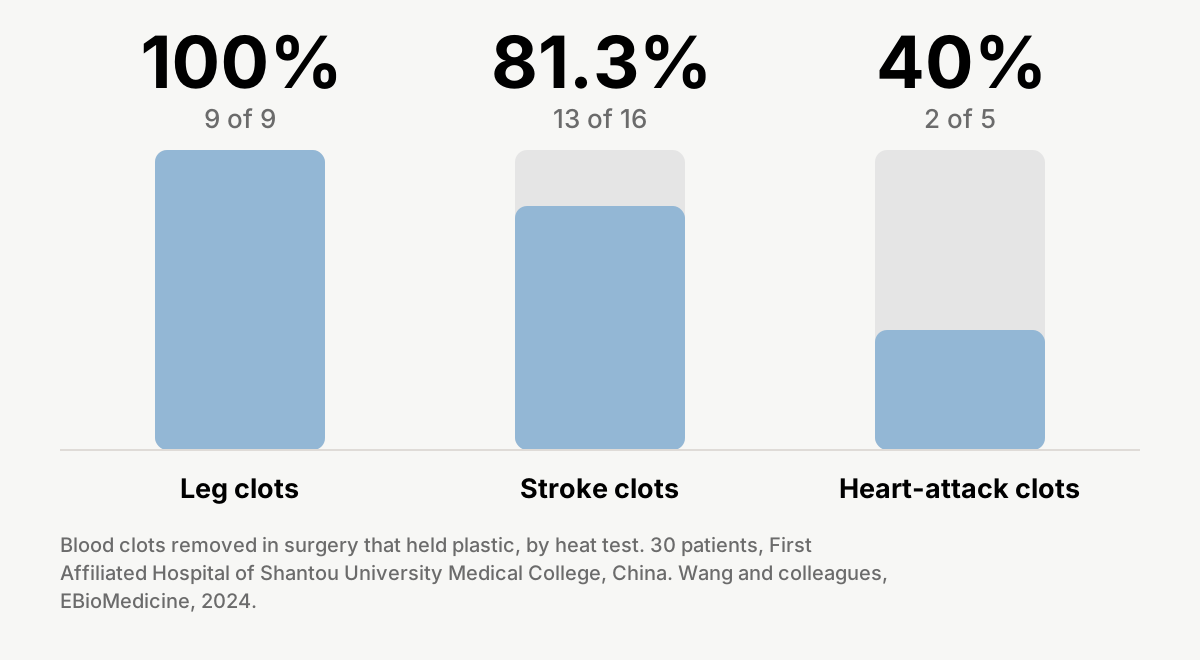
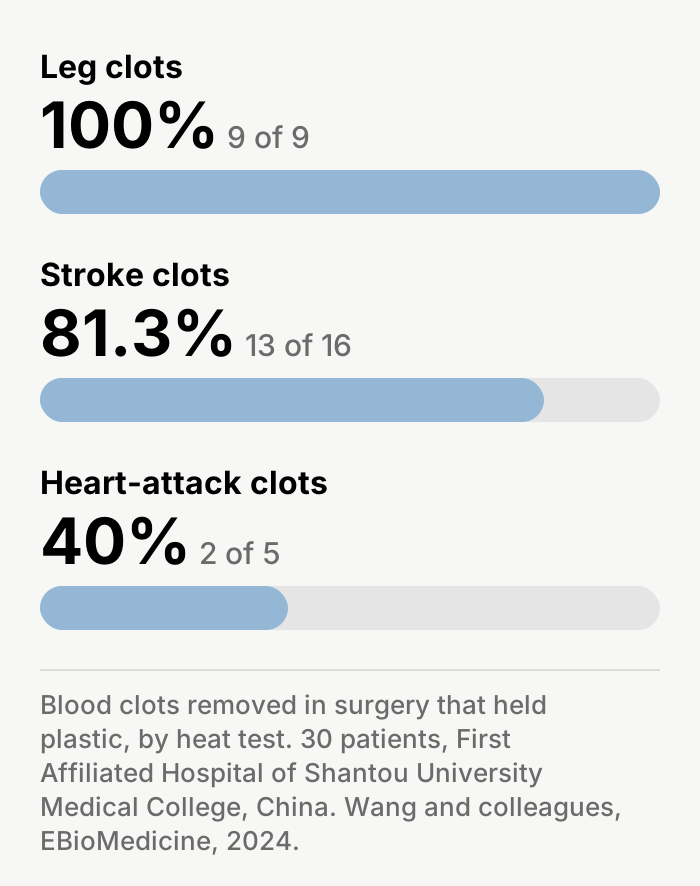
24 of 30 clots held plastic
In 2024, doctors at a hospital in Shantou, China, tested clots they had pulled out of 30 patients' blood vessels. 16 had a stroke, 5 a heart attack and 9 a clot deep in the leg. Plastic turned up in 24 of the 30 clots: 13 of 16 stroke clots, 2 of 5 heart-attack clots and 9 of 9 leg clots.[1]
Every leg clot held nylon
All 9 leg clots held nylon 66, a plastic used in fabrics, plastic bags and packaging.[1]
A laser counted the bits one by one
The team also checked the stroke clots with a laser, one particle at a time. It found 15 kinds of plastic. Most bits were polyethylene, a plastic used in packaging, and most were 20 to 50 microns wide. A micron is a thousandth of a millimeter.[1]
Could the plastic have come from the hospital?
The doctors checked. They tested the catheters and wires that touched the clots, the bottles the clots were kept in and the lab machine. None gave off plastic. Anyone with a stent or other implant was left out of the study.[1]
Which clots held plastic?[1]
Did more plastic mean a worse stroke?
Nearly twice the stroke score
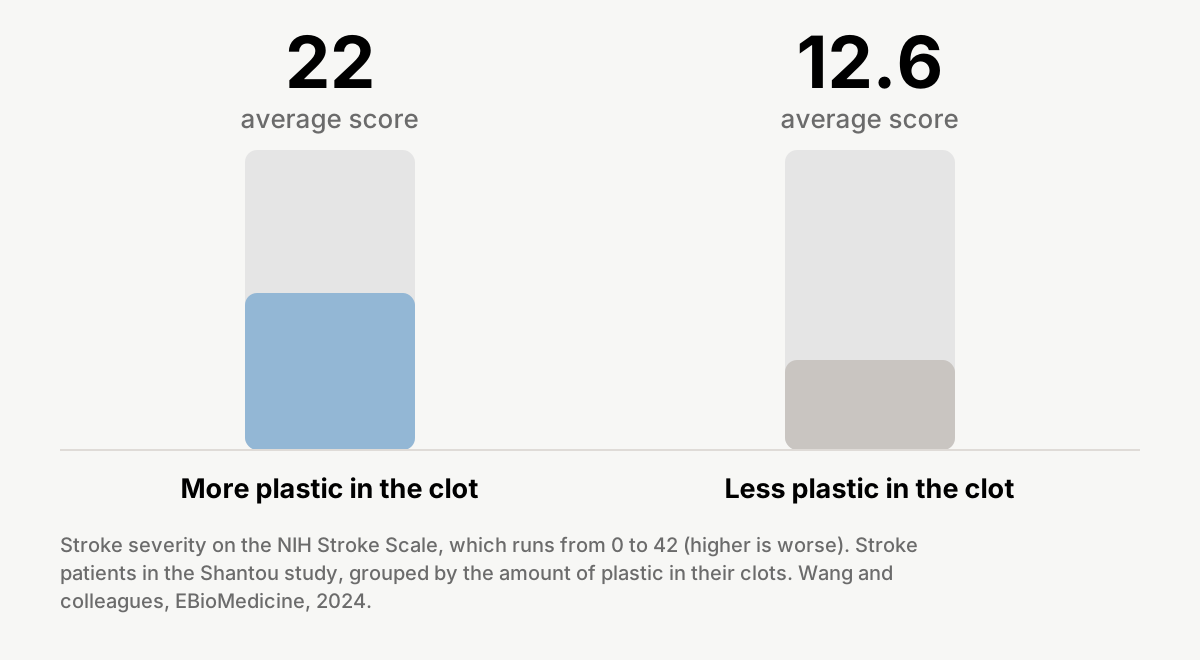
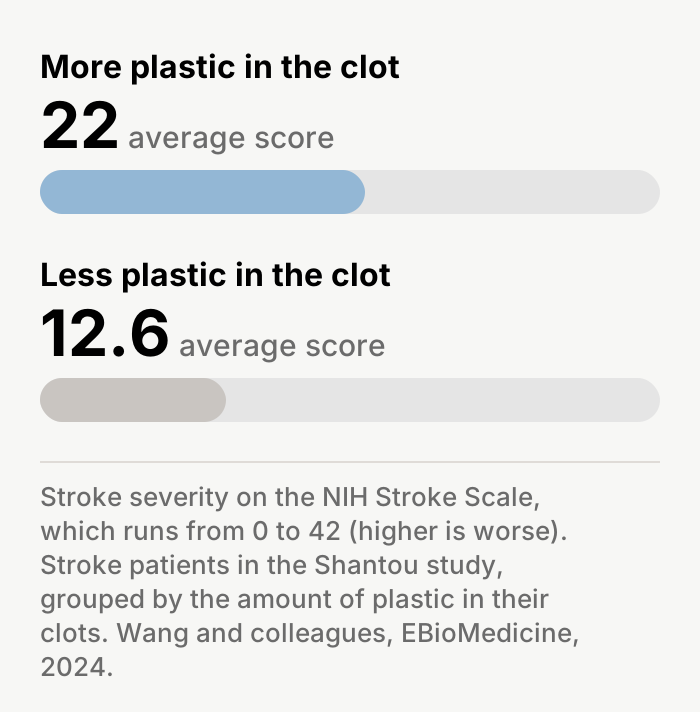
Yes, in this study. Doctors score strokes on a scale from 0 to 42, and a higher score means a worse stroke. Stroke patients whose clots held more plastic scored 22 on average. Those whose clots held less scored about 13.[1]
Clots further into the brain held more
Stroke clots that reached further into the brain's arteries held about twice as much plastic as clots that stopped short.[1]
How severe were the strokes?[1]
How does plastic get into our blood?
Mostly through what we eat and drink
Scientists think most of the plastic in our blood comes in through the gut, from what we eat and drink. Breathing and surgery are 2 other ways in.[3]
18 of 20 healthy people
In 2024, a team in Hull, England, tested the blood of 20 healthy volunteers. 18 of the 20 had plastic in their blood, 24 kinds in all. The team checked each particle under an infrared microscope.[3]
Food in plastic, nearly 3 times as much
In Korea, 32 of 36 healthy adults had plastic in their blood. People who kept half or more of their fridge food in plastic containers had nearly 3 times as much as everyone else.[2]
Do heart patients carry more plastic?
More in the blood of people with heart disease
In Beijing, doctors tested the blood of 101 people who came in with chest pain, before any procedure. People whose heart arteries turned out to be diseased had about 60% more plastic in their blood than people with clear arteries. Those having a heart attack had more than those with chest pain from narrowed arteries.[4]
Plastic in the arteries too
In Italy, patients with plastic in the plaque of a neck artery had a higher risk of heart attack, stroke or death in the years that followed. We walk through that study in our heart article.[6]
More vinyl, more heart trouble later
In Harbin, China, doctors tested the blood of 110 heart-attack patients and followed them for about two and a half years. The more PVC, the plastic known as vinyl, in that blood, the higher a patient's odds of another serious heart event. In 21 more heart-attack patients, the doctors tested the clots pulled from their heart arteries. All 21 held PVC, the same vinyl plastic.[5]
What about strokes in the US?
A team at Case Western Reserve University in Ohio compared 709 US neighborhoods along the coast. Where the seawater held the most microplastics, about 21% more people had had a stroke than where it held the least. That held after accounting for 154 other factors, such as age, income and air pollution.[7]
How did they find the plastic?
Two ways. A heat test burns a small sample and reads the gases to tell which plastics are there and how much. A laser or infrared microscope checks the particles one at a time. The Shantou team used both. The teams in England and Korea checked each particle under an infrared microscope.[1, 2, 3]
What this proves, and what it doesn't
What these studies show
- Plastic was in 24 of 30 clots removed from people with strokes, heart attacks and leg clots, including all 9 leg clots.[1]
- Stroke patients whose clots held more plastic had more severe strokes.[1]
- Most healthy people tested had plastic in their blood: 18 of 20 in England and 32 of 36 in Korea.[2, 3]
- In Korea, people who kept more food in plastic containers had nearly 3 times as much.[2]
- People with heart disease had more plastic in their blood than people with clear arteries.[4]
What these studies did not prove
- That plastic causes blood clots, strokes or heart attacks. Each study found a link, not a cause.[1]
- The exact amounts. The heat test used in some of these studies can mistake fat in blood for 2 common plastics: polyethylene, used in packaging, and PVC, known as vinyl. The Beijing and Harbin results lean on those 2.[1, 9]
- That every clot holds plastic. A team in Japan found none in clots from one kind of stroke once it checked the signals strictly.[8]
- That the results hold for everyone. The clot study was small, with 30 patients and 5 heart attacks, at one hospital.[1]
- Where the plastic came from. The Shantou team asked about bottles, bags and takeout food and could not pin down a source.[1]
- That the US link is about people's own blood. It compares neighborhoods and plastic in the sea.[7]
Questions readers are asking
Can microplastics cause blood clots?
No study has shown that yet. But in one hospital study, plastic was in 24 of 30 clots removed from patients, and stroke clots with more plastic came from worse strokes.[1]
Are there microplastics in your blood?
Most people tested so far have them. In England, 18 of 20 healthy volunteers had plastic in their blood. In Korea, 32 of 36 did.[2, 3]
Can microplastics cause a stroke?
Researchers don't know yet. In one study, stroke patients whose clots held more plastic had more severe strokes. Along the US coast, neighborhoods with the most microplastics in the sea had about 21% more people who had had a stroke than those with the least.[1, 7]
How do microplastics get into your blood?
Mostly through what you eat and drink, scientists think. Breathing and surgery are 2 other ways in. In Korea, people who kept more food in plastic containers had nearly 3 times as much plastic in their blood.[2, 3]
Can you lower the plastic in your blood?
No study here tested that. What they show is where it comes from: in Korea, more plastic food containers went with more plastic in the blood.[2]
About Aelo
Lab-tested on particles down to 0.5 microns (500 nanometers). Aelo's products are not connected to this research.
The technical record
Everything above is the story. Everything below is the paperwork: the exact statistics as published, the study’s own fine print, and the parts only a methods reviewer will want.
The numbers, exactly as published
| 24 of 30 clots held plastic | Heat test (Py-GC/MS), 10 target plastics. Nylon 66 in 13 of 16 stroke, 2 of 5 heart-attack and 9 of 9 leg clots; PVC in 6, 1 and 0; polyethylene in 4, 1 and 0. Median total in stroke clots 61.75 µg/g (range 14.88 to 221.8); leg clots mean 66.4 µg/g (23.8 to 94.2). |
|---|---|
| A laser counted the bits one by one | Laser direct infrared (LDIR): 384 particles in the stroke clots, 33.6% of them plastic; polyethylene 53.6% of the plastic; 84.6% of plastic bits 20 to 50 µm. |
| Nearly twice the stroke score | NIH Stroke Scale, higher vs lower plastic: 22.0 ± 7.5 vs 12.6 ± 3.5 (unpaired t test, p < 0.05). Adjusted linear regression: β 7.72 (95% CI 2.01 to 13.43). |
| Clots further into the brain held more | Clots reaching the middle cerebral artery 54.7 ± 10.1 µg/g vs clots limited to the internal carotid artery 27.6 ± 16.6 µg/g (p < 0.05). |
| A clot marker was higher too | Log D-dimer 8.3 ± 1.5 vs 6.6 ± 0.5 µg/L, plastic vs no plastic (p < 0.001). |
| Food in plastic, nearly 3 times as much | µ-FTIR, particle by particle: 6.8 vs 2.4 particles per mL (half or more of fridge packaging plastic, against less than half). 36 adults, 26 women and 10 men, median age 41, recruited 30 October to 7 November 2023. |
| Their blood tests changed too | hsCRP rose with the particle count (β 0.050, p < 0.001); fibrinogen rose with it (β 4.260, p = 0.036). On one clotting-time test (aPTT), blood with more plastic took longer to clot: 35.75 vs 33.78 seconds. |
| More in the blood of people with heart disease | Heat test (Py-GC/MS). Plastic found in all 101. 100.13 µg/g of blood (19 with clear arteries) vs 161.65 µg/g (82 with acute coronary syndrome); heart attack (34) higher than unstable angina (48). Blood drawn with a steel needle into sealed glass tubes at admission. |
| More vinyl, more heart trouble later | Heat test (Py-GC/MS). PVC in 105 of 110 (95.4%); per unit of PVC (mg/kg), odds ratio 1.090 (95% CI 1.032 to 1.152) for major adverse cardiac events (a repeat heart attack, heart failure, reduced heart function or non-accidental death) over 31.5 months, adjusted for age, sex, smoking, alcohol, high blood pressure and diabetes; 31 of 110 had one. Clots: PVC in 21 of 21, nylon 66 in 18. |
| What about strokes in the US? | Prevalence ratio for stroke 1.21 (95% CI 1.13 to 1.29), highest vs lowest microplastic tracts; diabetes 1.17; high blood pressure 1.10. NOAA marine data linked with CDC PLACES estimates. |
The fine print: the Shantou clot study
Design: 30 patients who had a clot removed by thrombectomy at the First Affiliated Hospital of Shantou University Medical College: 16 with ischaemic stroke, 5 with heart attack (myocardial infarction) and 9 with deep vein thrombosis. Mean age 65.2; 14 women and 16 men. Patients with stents, grafts or other implants, or nanomaterial drugs, were left out.[1]
Tests: pyrolysis-gas chromatography mass spectrometry (Py-GC/MS) for 10 target plastics on every clot; laser direct infrared (LDIR) and scanning electron microscopy on a subset of the stroke clots. Five blanks (catheters and guidewires that touched the clots, the sample bottle, the instrument) and 2 negative controls showed no plastic peaks.[1]
Results: plastic in 24 of 30 clots (13 of 16 stroke, 2 of 5 heart attack, 9 of 9 leg). The heat test found nylon 66, PVC and polyethylene; the leg clots held nylon 66 only. Stroke severity (NIH Stroke Scale, 0 to 42): 22.0 ± 7.5 with higher plastic against 12.6 ± 3.5 with lower (adjusted β 7.72, 95% CI 2.01 to 13.43). Log D-dimer 8.3 against 6.6 µg/L. Clot size did not track the amount of plastic. LDIR: 384 particles, 33.6% plastic, 15 kinds, polyethylene 53.6%, mostly 20 to 50 µm.[1]
Limits the authors state: small numbers (only 5 heart attacks), one hospital, some plastics outside the test's range, no exposure source identified, and no way to show cause and effect. Our note: the leg-clot result rests on nylon 66 alone. A 2025 study found the heat test unreliable for polyethylene and PVC in blood but possibly usable for nylon 66 at high levels.[1, 9]
The fine print: the blood studies in England and Korea
Hull, England (2024): 20 healthy volunteers; plastic in 18 of 20, 24 polymer types, identified particle by particle with μFTIR. The authors write that "the most likely route to enter the blood is via diet/gut", with breathing and surgery as 2 other routes. The blanks held 7 kinds of plastic, all different from those found in blood.[3]
Korea (2024): 36 healthy adults recruited through Inha University Hospital (26 women, 10 men; median age 41). Blood was drawn into glass tubes, and the needles and tubes were checked for contamination. Plastic was found in 32 of 36 by μ-FTIR, averaging 4.2 particles per mL; polystyrene, polypropylene and polyethylene were most common. People with half or more of their fridge packaging in plastic averaged 6.8 particles per mL, against 2.4. With more plastic: higher hsCRP and fibrinogen, and a longer aPTT clotting time (35.75 against 33.78 seconds), which the authors read as lower clotting ability on that test. The procedural blanks held 0 to 5 particles and were not subtracted.[2]
The fine print: the heart studies in Beijing and Harbin
Beijing (2024): 101 people with chest pain at Beijing Anzhen Hospital, July to September 2023; 82 had acute coronary syndrome (34 heart attack, 48 unstable angina) and 19 had clear arteries. Blood was drawn at admission, before any procedure. Plastic was found in all 101 by the heat test, averaging 100.13 µg/g in the 19 with clear arteries against 161.65 in the 82 with coronary syndrome; heart attack patients and those with higher-risk arteries carried more. Polyethylene and PVC made up 87% of the plastic found.[4]
Harbin (2025): consecutive patients with an ST-elevation heart attack and a heavy clot burden at the First Affiliated Hospital of Harbin Medical University, August 2021 to September 2022. 214 were enrolled; those over 65, with heart failure or who died were excluded (142 left), and 110 completed follow-up (31.5 months on average). The paper calls the samples coronary blood; its methods say 10 mL was drawn from a peripheral vessel with an all-glass syringe before the artery procedure, each device was used once, and glass-bottle blanks showed negligible or no contamination. By heat test: PVC in 105 of 110 (95.4%), polyethylene 71.8%, nylon 66 61.8%, polystyrene 43.6%. PVC was higher in the 31 patients who had a major adverse cardiac event; odds ratio 1.090 per unit and 2.374 per 10 units (which the paper words as a 1.374-fold increase). In clots pulled from 21 more heart-attack patients: PVC 21 of 21, nylon 66 18, polyethylene 16; more PVC went with more inflammation and immune cells in the clot. The authors note one center, a small sample, possible lab contamination and no data on sources such as takeout food or bottled water.[5]
Our note on both: they rest mostly on polyethylene and PVC measured by heat test, which a 2025 study found unreliable in blood because fats can read as those plastics.[9]
The fine print: the US neighborhood study
709 US coastal census tracts, each within 200 meters of the shoreline. Marine microplastic measurements (NOAA) were linked with disease estimates (CDC PLACES), adjusted for 154 variables including age, sex, race, income, the Social Vulnerability Index, insurance and PM2.5. Highest against lowest microplastic tracts: stroke prevalence ratio 1.21, diabetes 1.17, high blood pressure 1.10. An ecological study: it compares places and seawater, not people or their blood.[7]
The fine print: a study that found no plastic
A single-center study from INA Central Hospital in Japan tested clots removed from people with cardioembolic stroke, in which a clot forms in the heart and travels to the brain. Signals that looked like polyethylene and polystyrene did not match the real plastics, and no plastic was detected. A conference abstract, 2026.[8]
The fine print: the medical facts
Strokes: most are ischemic, caused when blood clots or other particles block blood vessels to the brain (CDC). Heart attacks: blood flow to part of the heart muscle suddenly becomes blocked; more than 800,000 people in the US have one each year (NHLBI, citing CDC). Deep vein clots: a clot in a deep vein, usually in the leg, which can break loose and travel to the lungs; as many as 600,000 such clots occur in the US each year (NHLBI). D-dimer is made when a clot dissolves (MedlinePlus). CRP is made by the liver in response to inflammation (MedlinePlus). Fibrinogen is a liver protein that helps clots form (MedlinePlus).[10, 11, 12, 13, 14, 15]
The fine print: funding, conflicts and how we checked
Every number on this page was checked against the study's full text, or against its abstract where noted, and is recorded in a fact sheet for each study. Aelo received no funding for this review and has no financial relationship with any study, its authors or its funders.[1, 2]
Sources
- Wang T, Yi Z, Liu X, Cai Y, Huang X, Fang J, Shen R, Lu W, Xiao Y, Zhuang W, Guo S. Multimodal detection and analysis of microplastics in human thrombi from multiple anatomically distinct sites. EBioMedicine. 2024;103:105118. doi:10.1016/j.ebiom.2024.105118. PMID 38614011. PMCID PMC11021838. Multimodal detection and analysis of microplastics in human thrombi from multiple anatomically distinct sites
- Lee DW, Jung J, Park SA, Lee Y, Kim J, Han C, Kim HC, Lee JH, Hong YC. Microplastic particles in human blood and their association with coagulation markers. Sci Rep. 2024;14:30419. doi:10.1038/s41598-024-81931-9. PMID 39638849. PMCID PMC11621780. Microplastic particles in human blood and their association with coagulation markers
- Leonard SVL, Liddle CR, Atherall CA, Chapman E, Watkins M, Calaminus SDJ, Rotchell JM. Microplastics in human blood: polymer types, concentrations and characterisation using μFTIR. Environ Int. 2024;188:108751. doi:10.1016/j.envint.2024.108751. Open access (CC BY 4.0). Microplastics in human blood: polymer types, concentrations and characterisation using μFTIR
- Yang Y, Zhang F, Jiang Z, Du Z, Liu S, Zhang M, Jin Y, Qin Y, Yang X, Wang C, Gao H. Microplastics are associated with elevated atherosclerotic risk and increased vascular complexity in acute coronary syndrome patients. Part Fibre Toxicol. 2024;21:34. doi:10.1186/s12989-024-00596-4. PMID 39164741. PMCID PMC11337598. Microplastics are associated with elevated atherosclerotic risk and increased vascular complexity in acute coronary syndrome patients
- Zhang Y, Gao Q, Gao Q, Xu M, Fang N, Mu L, Han X, Yu H, Zhang S, Li Y, Gong Y. Microplastics and nanoplastics increase major adverse cardiac events in patients with myocardial infarction. J Hazard Mater. 2025;489:137624. doi:10.1016/j.jhazmat.2025.137624. PMID 40007360. Open access. Microplastics and nanoplastics increase major adverse cardiac events in patients with myocardial infarction
- Marfella R, Prattichizzo F, Sardu C, et al. Microplastics and nanoplastics in atheromas and cardiovascular events. N Engl J Med. 2024;390:900-910. doi:10.1056/NEJMoa2309822. PMID 38446676. PMCID PMC11009876. Microplastics and Nanoplastics in Atheromas and Cardiovascular Events
- Ponnana SR, Shamsa EH, Chen Z, Rajagopalan T, Zhang T, Sirasapalli SK, et al. Marine microplastic concentration and associations with stroke and chronic disease prevalence. npj Cardiovasc Health. 2026;3. doi:10.1038/s44325-026-00133-6. PMCID PMC13241525. Marine microplastic concentration and associations with stroke and chronic disease prevalence
- Kobayashi Y. Microplastics not detected in cerebral thrombi from cardioembolic stroke: detection using pyrolysis-GC/MS. European Stroke Organisation Conference 2026, abstract ESOC2026A964. Eur Stroke J. 2026;11(Suppl 1):i286. doi:10.1093/esj/aakag023.494. Microplastics not detected in cerebral thrombi from cardioembolic stroke: detection using pyrolysis-GC/MS
- Rauert C, Charlton N, Bagley A, Dunlop SA, Symeonides C, Thomas KV. Assessing the efficacy of pyrolysis-gas chromatography-mass spectrometry for nanoplastic and microplastic analysis in human blood. Environ Sci Technol. 2025;59:1984-1994. doi:10.1021/acs.est.4c12599. PMID 39851066. PMCID PMC11800385. Assessing the efficacy of pyrolysis-gas chromatography-mass spectrometry for nanoplastic and microplastic analysis in human blood
- Centers for Disease Control and Prevention. About stroke. Updated October 24, 2024. About Stroke
- National Heart, Lung, and Blood Institute. Heart attack: what is a heart attack? What Is a Heart Attack?
- National Heart, Lung, and Blood Institute. Venous thromboembolism: what is venous thromboembolism? What Is Venous Thromboembolism?
- MedlinePlus. D-dimer test. National Library of Medicine. D-dimer Test
- MedlinePlus. C-reactive protein (CRP) test. National Library of Medicine. C-Reactive Protein (CRP) Test
- MedlinePlus Medical Encyclopedia. Fibrinogen blood test. National Library of Medicine. Fibrinogen blood test